

The Baku Process is a global framework for intercultural and intercivilizational dialogue, initiated in 2008 in Azerbaijan. Built on an inclusive model that brings together governments, international organizations, civil society representatives, and independent experts, the Baku Process has grown over more than fifteen years into one of the most recognized multilateral mechanisms for promoting cultural diversity, mutual understanding, and peaceful coexistence. It operates through a structured cycle of international forums, ministerial engagements, and institutional partnerships, and has received formal recognition from the United Nations General Assembly, the UN Secretary-General, UNESCO, and a range of other international bodies.
History
International Framework for Intercultural Dialogue
Available in:
- English
- Azərbaycanca
Overview
History of the Baku Process
A timeline of the milestones, partnerships, and international recognition that transformed the Baku Process into a leading framework for intercultural dialogue.
-
2008 — The Founding Conference
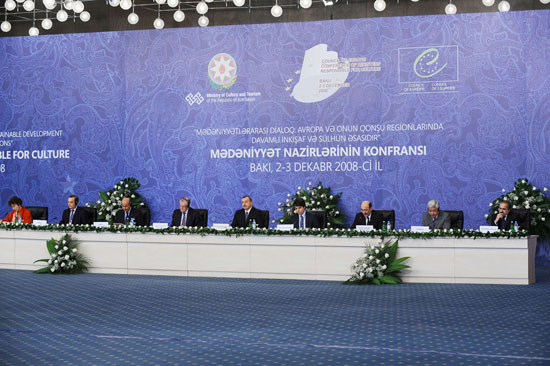
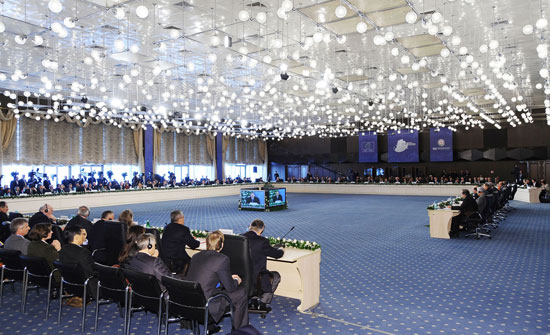
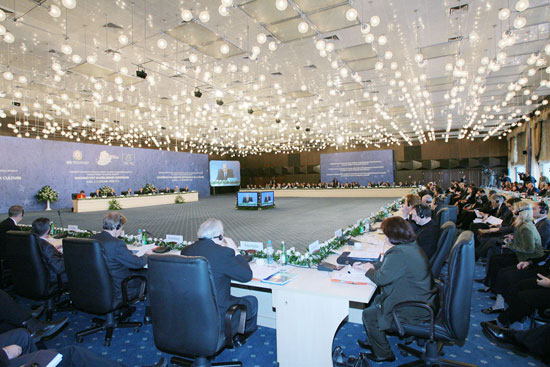
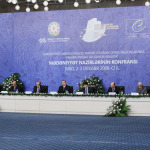
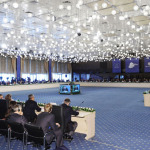
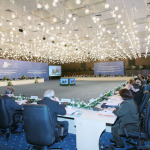
The Baku Process began on December 2–3, 2008, during the Conference of Ministers responsible for Culture of the Council of Europe, held in Baku. On that occasion, His Excellency Mr. Ilham Aliyev, President of the Republic of Azerbaijan, extended an invitation to the Culture Ministers of ten member states of the Organization of Islamic Cooperation (OIC) to participate alongside their European counterparts — the first time that OIC member state ministers had joined a Council of Europe ministerial conference as active participants.
The conference concluded with the adoption of the Baku Declaration for the Promotion of Intercultural Dialogue, which affirmed that cultural diversity constitutes a shared heritage of humanity and that sustained dialogue between civilizations is a necessary condition for international peace, security, and long-term development. The conference also launched the "Artists for Dialogue" project, reflecting an early commitment to engaging creative communities in the work of intercultural exchange.
-
2009 — The Sixth Conference of Ministers of Culture of Islamic Countries
In October 2009, Baku hosted the Sixth Conference of Ministers of Culture of Islamic Countries. Building directly on the precedent established the previous year, Azerbaijan extended the format in the opposite direction — this time inviting European states to participate in an Islamic ministerial gathering, through a dedicated Ministerial Roundtable titled "Fostering Dialogue and Cultural Diversity — Baku Process."
The conference adopted the Final Communiqué of the Sixth Islamic Conference of Culture Ministers, emphasizing support for joint efforts aimed at spreading cooperation and mutual respect between cultures. Together, the 2008 and 2009 conferences established a reciprocal model of engagement between European and Islamic institutional frameworks that became a defining structural feature of the Baku Process.
-
2010 — The United Nations General Assembly Announcement
In September 2010, His Excellency Mr. Ilham Aliyev, President of the Republic of Azerbaijan, addressed the 65th session of the United Nations General Assembly and announced the establishment of the World Forum on Intercultural Dialogue, to be held on a recurring basis in Baku. The announcement formalized the transition of the Baku Process from a diplomatic framework into a structured, operational global platform, and set the stage for what would become a biennial cycle of international forums.
International
Recognition
Recognized by leading international institutions.
Over the course of its development, the Baku Process has received formal recognition from a range of international bodies.
The United Nations General Assembly, through Resolution A/RES/72/136, unanimously recognized the Baku Process as a key global mechanism for fostering intercultural dialogue and called upon all member states to actively engage with it.
The UN Secretary-General's Annual Report (A/72/488, 2017) to the General Assembly on intercultural and interreligious dialogue and a culture of peace referenced the World Forum on Intercultural Dialogue as a key global platform for promoting intercultural dialogue.
The UN Plan of Action to Safeguard Religious Sites (2019) designated the Fifth World Forum on Intercultural Dialogue as one of the main global platforms for promoting intercultural and interreligious dialogue.
The UNESCO Executive Board, through Resolution 215 EX/43 (2022), expressed formal support for the Baku Process, endorsing it as an international forum bringing together diverse stakeholders for effective dialogue, and encouraged member states and international organizations to continue supporting it.
The Organization of Islamic Cooperation (OIC) has consistently supported the platform. Successive resolutions by the Council of Foreign Ministers and the Standing Committee on Information and Cultural Affairs have formally commended the Baku Process and encouraged member states to participate in its initiatives.
The Final Declaration of the Sixth World Forum (2024) was officially circulated as a United Nations General Assembly document (A/78/884).