The Azerbaijani Model of Intercultural Dialogue: Awareness-Raising and the Creation of New Tools
Available in:
- English
- Azərbaycanca
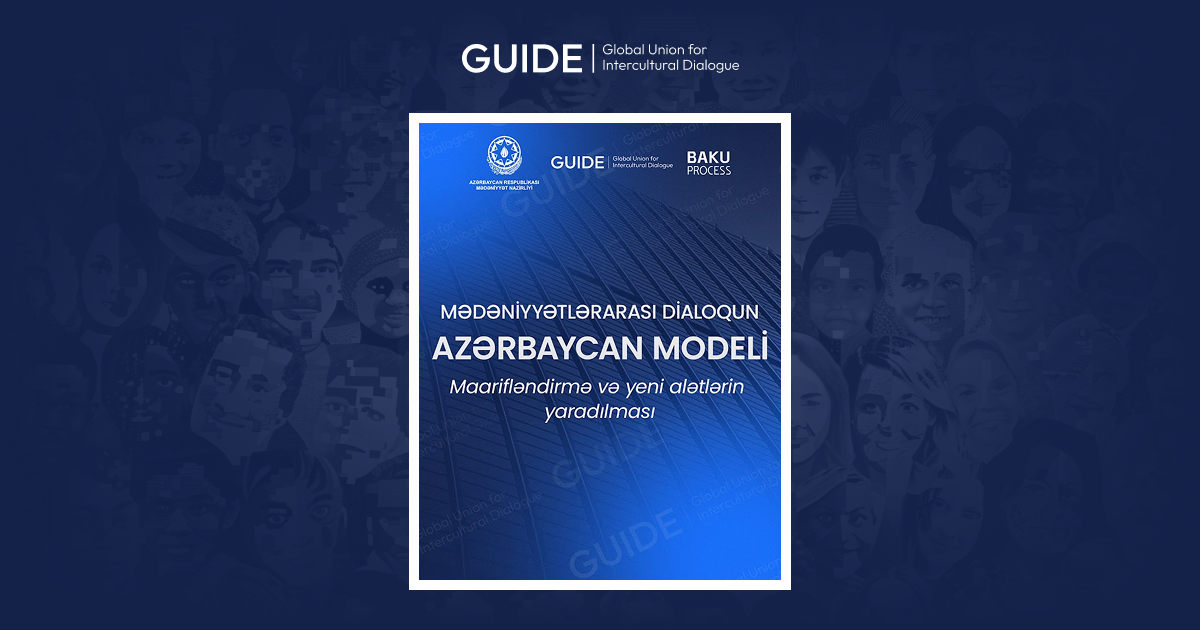
With the support of the Ministry of Culture of the Republic of Azerbaijan, the Global Union for Intercultural Dialogue (GUIDE) launched the project: "The Azerbaijani Model of Intercultural Dialogue: Awareness-Raising and the Creation of New Tools".
This initiative was designed to strengthen the expertise of cultural workers, NGO representatives, and youth in the fields of intercultural dialogue and international cooperation. By bridging theoretical knowledge with practical tools, the project promotes the "Baku Process" and Azerbaijan’s historic role as a meeting point for diverse civilizations.
Project Objectives & Impact
The project focuses on building a sustainable framework for cultural diplomacy through several key pillars:
Capacity Building: Training programs aimed at educating approximately 200 participants to enhance their professional skills in multiculturalism.
Self-Assessment Tools: Development of a specialized tool for organizations to evaluate their own multiculturalism and inclusivity standards.
Statement on Supporting Intercultural Dialogue: Development of a pledge for organizations to commit to promoting intercultural dialogue within their organizations.
International Promotion: Showcasing the "Azerbaijani Model" globally to strengthen cooperation within the framework of the World Forum on Intercultural Dialogue.
Training Methodology: "Learning by Doing"
The core of the project involves a highly interactive, 3-hour training module designed for youth aged 18–30. Utilizing non-formal education and experiential learning, the sessions guide participants through the complexities of cultural identity.
Key Learning Modules
The Culture Iceberg: Participants explore "visible" elements (food, music, clothing) and "invisible" depths (values, beliefs, time perception) to understand the root of cultural misunderstandings.
The Azerbaijan Model: A deep dive into the country's history of religious coexistence and its modern role in hosting international dialogue initiatives.
"Step Forward" Exercise: An impactful activity where participants adopt role cards to experience how privilege and inequality affect access to education and social safety.
Practical Application: Through role-playing and research, attendees practice communication strategies to resolve conflicts in the workplace and community.
Implementation Highlights
To ensure widespread reach, the training sessions were conducted in both local and international languages across major cultural hubs.
Through these sessions, participants gain the empathy and practical skills necessary to become "Dialogue Defenders" within their own communities, ensuring the continued success of the Azerbaijani model of peaceful coexistence.